Posted on

Multi-Pair Disulfide Cyclization

Mechanisms & Role of Disulfide Bonds in Peptide Architecture

Disulfide bonds serve as vital covalent configurations governing the secondary and tertiary structural stability of numerous peptides and functional proteins. These critical linkages are widely observed across almost all eukaryotic extracellular proteins, secretory peptides, and peptide toxins. Structurally, a disulfide bridge is formed via the selective oxidative coupling of two proximal Cysteine (Cys) sulfhydryl (-SH) side chains. The introduction of these covalent cross-links significantly restricts the conformational flexibility of the peptide backbone, driving enhanced binding affinity toward target receptors and providing robust metabolic protection against fast-acting proteolytic degradation within serum environments.

When a target sequence houses only a single pair of Cysteine residues, the cyclization cascade is highly straightforward. The linear peptide chain can be smoothly assembled via standard solid-phase or liquid-phase strategies and subsequently oxidized under mild alkaline liquid buffers (typically monitored within a precise pH 8.0 to 9.0 window) to yield the intended cyclic architecture. However, when complex multi-site configurations require the precise mapping of two, three, or more distinct disulfide pairs, spontaneous thermodynamic oxidation inevitably triggers chaotic mismatched cross-linking, producing biologically inactive structural isomers. To eliminate this issue, advanced orthogonal protection schemes must be deployed during chain elongation.

Advanced Orthogonal Regioselective Pairing Platforms

To achieve absolute structural accuracy in multi-disulfide systems, Genixpep applies a highly selective chemical deprotection strategy. By leveraging distinct side-chain protecting groups with orthogonal cleavage profiles, we direct the sequential unmasking and oxidation of specific sulfhydryl pairs on the resin or in solution.

Standard Sulfhydryl (Trityl / Thiol) Protecting Group Library:
Genixpep routinely utilizes strategic combinations of Trt (Trityl), Acm (Acetamidomethyl), Mmt (4-Methoxytrityl), tBu (tert-Butyl), Bzl (Benzyl), Mob (p-Methoxybenzyl), and Tmob (2,4,6-Trimethoxybenzyl) blocks to construct selective, multi-stage oxidation pathways.

Regioselective Oxidation on 2-Cl & Rink Amide Matrix

The diagram below demonstrates our optimized pathways using 2-Chlorotrityl Chloride Resin and Rink Amide Resin supports. By combining standard acid-labile groups (like Trt) with iodine-oxidizable tags (like Acm), the first disulfide bridge is formed under mild conditions while the remaining pairs stay completely protected. This sequence allows step-wise, controlled folding of highly intricate multi-cyclic peptide structures.

Pre-Formed Disulfide Dimer Engineering

While multi-pair cyclization is typically executed during the final post-assembly processing stages, certain complex architectures require the insertion of pre-formed disulfide building blocks. This approach allows the smooth incorporation of pre-oxidized cystine segments directly during active coupling cycles, which effectively prevents premature chain termination and scales up final target synthesis yields.
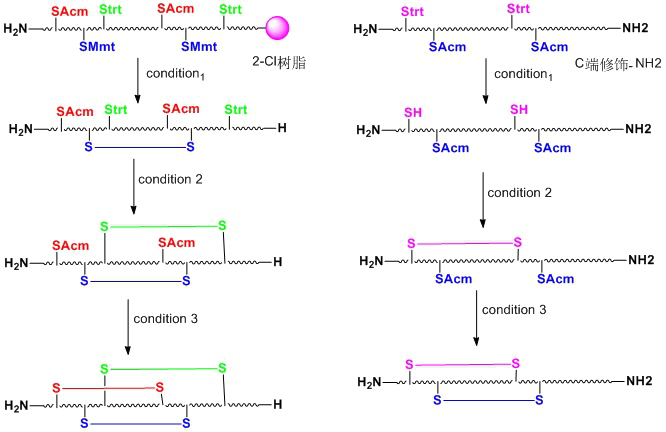
Regioselective Multi-Disulfide Bond Formation Chemical Steps
Figure 1. Chemical Reaction Sequences and Deprotection Conditions for Multi-Disulfide Bridge Mapping, Comparing On-Resin Trt/Acm Clearing Sequences (Condition 1 to Condition 3) Across C-Terminal Modified Amide Matrices.

Genixpep Cyclization & Disulfide Customization Matrix

Leveraging our established liquid-phase and on-resin oxidative platforms, Genixpep delivers a comprehensive portfolio of structurally verified cyclic peptides configured to specific folding coordinates.

Single Disulfide Cyclization

  • 1x Disulfide Pair (Intrachain Monocyclic)
  • Head-to-Tail Intramolecular Amide Bridges
  • Side-Chain-to-Tail Cyclic Constructs
  • Mild Liquid Buffer Aerial Oxidation Control

Multiplexed Multi-Disulfide Folding

  • Dual Disulfide Pairs (2x Bridges, Bicyclic)
  • Triple Disulfide Pairs (3x Bridges, Tricyclic)
  • Orthogonal Regioselective Trt/Acm Pairing
  • Directed Isomeric Folding Layouts

Intermolecular & Custom Linking

  • Symmetrical Intermolecular Disulfide Dimers
  • Asymmetrical Intermolecular Disulfide Dimers
  • Mpa (Beta-Mercatopropionic Acid) N-Terminal Cyclization
  • Thioether / Stable Non-Reducible Isosteres
Regulatory Compliance Notice: All custom disulfide cyclization configurations, multi-cyclic synthetic schemes, and regioselective chemical data compiled above are engineered exclusively for academic in-vitro profiling, receptor-binding screening, and discovery-scale laboratory R&D applications. These compounds are not approved, manufactured, or safe for direct human therapeutic consumption or clinical diagnostics.
Posted on

Phosphorylation Modifications

Mechanisms of Protein & Peptide Phosphorylation

Reversible protein phosphorylation stands as one of the most critical post-translational modifications (PTMs) in eukaryotic organisms. Studying phosphorylated proteins and custom peptides provides pivotal insights into cellular signal transduction, metabolic regulation, and cell cycle checkpoints. Recently, with the rapid evolution of phosphoproteomics, the structural profiling of protein phosphorylation has garnered widespread academic interest, especially since many natural toxins and pathogenic vectors exert their downstream physiological impacts by modulating the phosphorylation states of intracellular target proteins.

Regulation of Protein Activity via Phosphorylation
Figure 1. Operational Diagram of Protein Activation and Inactivation Regulated by Kinase and Phosphatase Cascade Systems.

Advanced Synthetic Strategies for Phosphorylated Peptides

Phosphorylated peptides typically refer to target sequences where the hydroxyl groups on the side chains of Serine (Ser), Tyrosine (Tyr), or Threonine (Thr) residues have been esterified into phosphate groups. Currently, two major chemical approaches are utilized in solid-phase peptide synthesis (SPPS) for engineering phosphopeptides: the Building Block Method (Pre-phosphorylated Monomer Strategy) and the Post-assembly Phosphorylation Method.

1. Building Block Method (Pre-phosphorylated Monomer Strategy)

Best For: Single or Low-Density Phosphorylation Sites

During standard chain elongation, amino acid monomers with pre-protected phosphate side chains are directly coupled into the sequence. However, when introducing phosphorylated amino acid monomers, coupling efficiency is frequently compromised due to steric hindrance exerted by the bulky side-chain protecting groups. Furthermore, during sequential couplings following the introduction of the phosphomonomer, subsequent amino acid assemblies become increasingly difficult. This challenge intensifies exponentially when synthesizing sequences containing multiple contiguous or high-density phosphorylation sites, often yielding highly complex crude mixtures with low final target yields.

2. Post-assembly Phosphorylation Method (On-Resin Modification Strategy)

Best For: Multi-Site & High-Difficulty Phosphopeptides

To bypass the steric constraints of building blocks, the peptide chain is first fully assembled on the solid-phase resin using selective side-chain protecting groups. For instance, the target hydroxyl side chain of Tyrosine (Tyr) or Threonine (Thr) can be incorporated without standard protection during chain elongation, allowing it to react directly during the modification stage. For side-chain protected Serine blocks, selective deprotection can be precisely achieved on-resin under mild conditions (such as 1% TFA/DCM). Once the target hydroxyl groups are exposed, on-resin phosphorylation is executed using reagents like dibenzyl phosphoramidite and 1H-tetrazole to form a phosphite triester intermediate bound to the peptide matrix. This intermediate is subsequently oxidized under controlled peracid conditions to generate the stable, final phosphorylated peptide architecture.

Comparison: Monomer Strategy vs Post-Assembly Phosphorylation
Figure 2. Chemical Synthesis Workflows Comparing Direct Monomer Incorporation (SPPS) against On-Resin Post-Assembly Phosphorylation.

Genixpep Phosphorylation Synthesis Matrix

Leveraging our optimized on-resin post-assembly modification platform, Genixpep routinely delivers high-purity, structurally verified custom phosphopeptides tailored for complex biochemical assays.

Residue Specificity

  • pSer (Phosphoserine) Customization
  • pTyr (Phosphotyrosine) Customization
  • pThr (Phosphothreonine) Customization
  • D-pSer / D-pTyr / D-pThr Chiral Variants

Multi-Site Multiplexing

  • Standard Single-Site Phosphorylation
  • Dual-Site (2 Phosphorylation Sites) Layouts
  • Triple-Site (3 Phosphorylation Sites) Synthesis
  • High-Density (4 to 5+ Phosphorylation Sites) Controls

Co-Modification Compatibility

  • Phosphorylation + Fluorescent Dye Labeling (FITC/FAM)
  • Phosphorylation + Biotinylation Conjugation
  • Phosphorylation + Disulfide Bridge Cyclization
  • Phosphorylation + Isotope Labeling (C13, N15)

Case Study: Synthesis of a Complex Multi-Phosphorylated Peptide

Target Sequence Configuration: Thr(HPO3), Tyr(HPO3), Ser(HPO3) Multiplex Panel
Structural Characteristic: Contains 4 distinct, highly steric phosphorylation sites mapped as (xxx pS pT xxx pS xxx pT x).
Achieved Purity: ≥ 95% via Analytical HPLC Analysis | Standard Turnaround: 3 Weeks.

Analytical HPLC Chromatogram Profile

Analytical HPLC Analysis of 4x Phosphorylated Peptide
Figure 3. Analytical High-Performance Liquid Chromatography (HPLC) Trace Confirming a Single Sharp Symmetric Peak with ≥95% Purity at 214nm.

ESI-Mass Spectrometry (MS) Characterization

ESI-MS Mass Spectrometry Characterization Proof
Figure 4. Electrospray Ionization Mass Spectrometry (ESI-MS) Spectrum Verifying the Exact Molecular Mass Weight and Absolute Charge-to-Mass Ratios of the Target Product.
Regulatory Compliance Notice: All custom phosphorylation synthesis services, analytical profiling trace data, and structural characterizations featured herein are intended exclusively for laboratory-scale R&D applications, cell signaling tracking, and academic research purposes. Products are not available, engineered, or certified for direct human clinical diagnostics or therapeutic administration.
Posted on

Peptide-Carrier Protein Conjugation Services (KLH, BSA, OVA)

Mechanisms & Applications of Peptide-Carrier Protein Conjugation

Small synthetic peptides, typically acting as haptens due to their low molecular weight, generally fail to trigger a robust immune response on their own. To induce high-affinity antibody production within host organisms, these peptide sequences must be covalently conjugated to large, highly immunogenic carrier proteins. This bioconjugation process preserves the structural integrity of the target epitope while presenting it efficiently to the host immune machinery. Genixpep offers a premium, high-density carrier conjugation platform utilizing specialized chemical cross-linkers to securely anchor target custom peptides onto three industry-standard carrier matrices: Keyhole Limpet Hemocyanin (KLH), Bovine Serum Albumin (BSA), and Ovalbumin (OVA).

Selecting the optimal chemical linkage site is crucial for successful downstream antibody specificity. Depending on the target sequence configuration and structural masking requirements, Genixpep applies cross-linking strategies through three precise orientations: N-terminal amine ($\alpha$-NH₂ or internal Lysine side chains) using glutaraldehyde or bis-diazotized benzidine methodologies; C-terminal carboxyl (-COOH or Glutamic/Aspartic acid side chains) driven by carbodiimide (EDC) condensation; or highly site-specific sulfhydryl groups via Cysteine residues (-SH) mediated by heterobifunctional cross-linkers like SMCC or MBS. This orientation-specific approach ensures that your critical antigenic epitope remains fully exposed and accessible.

Carrier Protein Modification Modalities

We provide high-efficiency conjugation options across all three standard carrier systems, customizable based on whether your final product is destined for animal immunization, ELISA screening, or western blot validation.

01

KLH Conjugation Services

多肽 KLH 偶联修饰

Keyhole Limpet Hemocyanin (KLH) is a massive, copper-containing protein featuring an ultra-complex quaternary architecture that makes it the premier choice for generating primary antibodies in host animals.

  • Via N-Terminus (-NH₂): Covalent anchoring via terminal or internal amine coordinates.
  • Via C-Terminus (-COOH): Precise activation of terminal or side-chain carboxyl links.
  • Via Cys Sulfhydryl (-SH): Highly stable thioether bonds linked through target Cysteine residues.
02

BSA Conjugation Services

多肽 BSA 偶联修饰

Bovine Serum Albumin (BSA) is a highly stable, well-characterized globular protein frequently used as a carrier or blocking agent in quantitative immunoassays like ELISA.

  • Via N-Terminus (-NH₂): Robust amine coupling utilizing standard homobifunctional configurations.
  • Via C-Terminus (-COOH): Efficient carboxyl conjugation mediated by active ester intermediates.
  • Via Cys Sulfhydryl (-SH): Site-directed maleimide cross-linking via internal or terminal cysteines.
03

OVA Conjugation Services

多肽 OVA 偶联修饰

Ovalbumin (OVA) serves as an independent carrier protein control, essential for ruling out carrier-specific cross-reactivity during secondary ELISA screening phases.

  • Via N-Terminus (-NH₂): Smooth amine-driven conjugation across specified sequence anchors.
  • Via C-Terminus (-COOH): Targeted carbodiimide coupling protecting sensitive interior loops.
  • Via Cys Sulfhydryl (-SH): Regioselective sulfhydryl coupling ensuring clear structural presentation.
Chemical Reaction Mechanisms for KLH, BSA, and OVA Peptide Conjugation
Figure 1. Operational Reaction Cascades for Hapten-Protein Coupling, Illustrating Heterobifunctional SMCC Sulfhydryl Activation Versus Direct EDC Carboxyl-Amine Condensation Networks.

Case Studies: Certified Carrier-Coupled Custom Peptides

Below are representative high-purity custom sequences successfully synthesized, orientation-conjugated to target carrier proteins, and validated via analytical workflows for global delivery.

Project ID Target Product Specification Exact Sequence & Linkage Mapping Conjugation Details
GP-CONJ-01 KLH-Coupled Antigenic Probe Cys-Asn-Lys-Ile-Lys-Arg-Arg-His-Val-Ile-Lys-Pro Site-specific conjugation to KLH via the N-terminal Cys Sulfhydryl residue.
GP-CONJ-02 BSA-Coupled Immunogen Probe Asn-Lys-Ile-Lys-Arg-Arg-His-Val-Ile-Lys-Pro Directional conjugation to BSA via the C-terminal Carboxyl (-COOH) group.
Standard Quality Assurance & Analytical Deliverables:
All custom immunogenic haptens are assembled using high-purity Fmoc-SPPS protocols and pre-purified via analytical RP-HPLC. Following successful protein cross-linking, unbound excess peptide is thoroughly removed via extensive dialysis or size-exclusion chromatography. Final deliverables are accompanied by a comprehensive corporate Certificate of Analysis (COA) documenting synthesis metrics, raw peptide MS profiles, and verified protein binding data.
Regulatory Compliance Notice: All carrier protein conjugation services, KLH/BSA/OVA custom macromolecular complexes, and analytical assay datasets featured on this datasheet are intended exclusively for academic in-vitro laboratory research, antibody validation panels, and preclinical vaccine discovery scale assays. These biological conjugates are not cleared, safe, or manufactured for direct human diagnostic screening, medical therapeutic intervention, or live animal consumer applications.
Posted on

Click Chemistry Peptide Synthesis

Mechanisms & Applications of Click Chemistry in Peptide Synthesis

Click chemistry has emerged as a revolutionary bioorthogonal bioconjugation platform within modern drug discovery, chemical biology, and diagnostic probe development. Click peptides utilize selectively incorporated Azide or Alkyne functional groups to establish highly efficient, rapid, and structurally seamless links with external target modalities—including fluorescent dyes, macromolecular carrier proteins, and tailored oligonucleotides (DNA/RNA chains). Characterized by high thermodynamic driving forces, exquisite regioselectivity, and high chemical yields under ambient aqueous conditions, click reactions completely bypass standard side-chain cross-reactivities, enabling precise molecular architectures to be created with zero structural distortion.

Genixpep utilizes highly optimized solid-phase peptide synthesis (SPPS) parameters to precisely position specific bioorthogonal handles into peptide sequences. Depending on the targeted downstream conjugation profile, these specialized groups are introduced either at the N-terminus, C-terminus, or along targeted interior side chains. This approach grants our research partners full freedom to execute flawless macromolecular tagging without altering the core physiological characteristics or receptor-binding affinities of the parent peptide.

Core Categorizations of Click Modified Peptides

Based on the specific reactive functional group embedded within the amino acid backbone, click-engineered peptides are systematically divided into two major operational platforms:

1. Azide-Modified Peptides (叠氮修饰多肽)

Azide groups are site-specifically introduced into the peptide framework utilizing high-purity building blocks such as Azidoacetic Acid. These reactive configurations serve as premium partners for standard copper-catalyzed or copper-free alkynyl strains.

Representative Configurations Delivered:
  • Lys(N3)-peptide — Selective side-chain Azide tagging on internal Lysine residues.
  • N3-PEG-peptide — Insertion of flexible, hydrophilic Polyethylene Glycol spacers terminating in an Azide core.
  • DBCO-peptide — Dibenzocyclooctyne integration, engineered exclusively for Strain-Promoted Copper-Free Click Reactions (SPAAC).

2. Alkyne-Modified Peptides (炔基修饰多肽)

Alkyne functional groups are precisely introduced across specified coordinates using custom building blocks such as Alkynylacetic Acid. These modifications are ideal for classical bioorthogonal ligations with standard azide labels.

Representative Configurations Delivered:
  • propargyl-Gly-peptide — Incorporation of Propargylglycine monomers to yield stable terminal alkyne coordinates.
  • Alkyne-PEG-peptide — Strategic insertion of monodisperse PEG linkers armed with a terminal alkyne docking point.
Operational Layout of Azide and Alkyne Bioconjugation Mechanics
Figure 1. Operational Framework of Click Chemistry Conjugation, Comparing Copper-Catalyzed (CuAAC) and Strain-Promoted Copper-Free (SPAAC) Cross-Linkage Pathways for Advanced Biomolecular Tagging.

Genixpep Bioorthogonal Ligation & Quality Metrics

By pairing high-density Fmoc-SPPS with rigorous purification techniques, Genixpep ensures that all click-active products retain flawless structural integrity and long-term shelf stability.

Reaction Modalities

  • Copper-Catalyzed Ligation (CuAAC)
  • Copper-Free Ring Strains (SPAAC)
  • High-Yield Aqueous Buffers
  • Bioorthogonal Specificity

Target Applications

  • Fluorescent Dye Conjugations
  • Macromolecular Carrier Cross-Links
  • Oligonucleotide DNA/RNA Tethers
  • Diagnostic Biomarker Profiling

Analytical Deliverables

  • High-Resolution ESI-MS Spectra
  • Analytical RP-HPLC Chromatograms
  • Absolute ≥95%–98% Purity Profiles
  • Comprehensive Corporate COAs
Regulatory Compliance Notice: All bioorthogonal click chemistry modification schemes, azido/alkynyl compound structures, and analytical validation profiles compiled above are engineered exclusively for academic in-vitro laboratory research, macromolecular cross-linking optimization, and preclinical drug screening assays. These cyclic configurations are not approved, safe, or manufactured for direct human clinical diagnosis, therapeutic administration, or veterinary use.
Posted on

Methylation Modifications

Mechanisms of Peptide & Protein Methylation

Methylated peptides, also referred to as methylation-recognized target peptides, represent critical post-translational modifications (PTMs) that regulate a vast array of eukaryotic cellular events. This biological process involves the covalent attachment of methyl groups to specific amino acid residues, catalyzed by highly specialized protein methyltransferases. Methylation plays a critical role in chromatin remodeling, gene silencing, transcriptional regulation, and epigenetic signaling networks. Recent biochemical research indicates that aberrant or altered methylation patterns on histone tails are directly correlated with DNA damage response failures, chromosome inactivation, and tumor progression. Consequently, engineering precisely structured methylated peptides has emerged as a cornerstone methodology for structural biologists and epigenetic drug discovery teams.

In vivo, the primary chemical targets for enzymatic methylation are Lysine (Lys) and Arginine (Arg) residues. Histone core methylation acts as a key epigenetic switch that directly modulates chromatin condensation and selectively recruits downstream transcription factors. To support advanced chemical biology profiling, Genixpep has engineered a robust, high-efficiency solid-phase modification platform capable of yielding site-specific, high-purity mono-, di-, and tri-methylated peptide blocks tailored for international laboratory environments.

Advanced Methylation Modifications (Me1, Me2, Me3)

To overcome the synthetic challenges associated with structural steric hindrance during coupling, Genixpep exclusively utilizes premium-grade pre-methylated Fmoc monomers. Our platform guarantees precise structural preservation and absolute control over mono-, di-, and tri-methyl states without side-chain cross-reactivity.

Standard High-Purity Monomer Inventory:
Fmoc-Lys(Me,Boc)-OH,  Fmoc-Lys(Me2)-OH,  Fmoc-Lys(Me3)-OH.HCl,  Fmoc-Arg(Me,Pbf)-OH,  Fmoc-Arg(Me)2-OH.HCl (asymmetrical),  Fmoc-Arg(Me)2-OH.HCl (symmetrical).

Solid-Phase Assembly & Synthesis Execution

By utilizing precisely protected building blocks during standard solid-phase peptide synthesis (SPPS) workflows, we completely eliminate spontaneous over-methylation and regional isomer formations. This ensures that the targeted Lysine or Arginine side-chain amine houses the exact intended molecular charge, maintaining native binding affinity configurations.

Downstream Purification & Structural Validation

All crude methylated fragments undergo rigorous reversed-phase preparative High-Performance Liquid Chromatography (HPLC) purification. Final deliverables are consistently accompanied by standard Quality Assurance documentation, including comprehensive mass spectrometry (MS) profiles, analytical HPLC chromatograms, and Certificates of Analysis (COA) to guarantee structural purity.

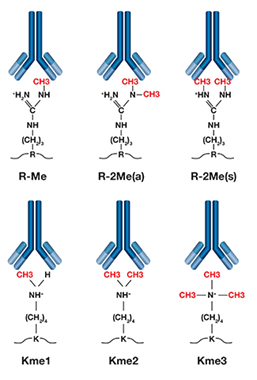
Chemical Structural Profiles of Methylated Arginine and Lysine Residues
Figure 1. Chemical Structures of Site-Specific Methylated Derivatives, Highlighting Mono-Methylated, Di-Methylated (Symmetrical/Asymmetrical), and Tri-Methylated State Core Configurations (R-Me, R-2Me, KMe1, KMe2, KMe3).

Case Studies: High-Difficulty Methylated Sequences Delivered

Below are representative custom sequences successfully synthesized, purified, and verified by our engineering team, demonstrating multi-site capability and co-modification compatibility.

Project ID Target Sequence Sequence Configuration Modification Type Guaranteed Purity
GP-METH-01 Pro-Arg-Thr-Pro-Pro-Arg(Me)-Pro-Ser-Gln-Gly-Lys-NH2 Side-Chain Mono-Methylation ≥ 95% (HPLC)
GP-METH-02 Biotin-Ile-Lys(Me2)-Gly-Glu-Phe-NH2 N-Terminal Biotinylation + Internal Di-Methylation ≥ 98% (HPLC)
GP-METH-03 Pro-Arg(Me2, asymmetrical)-Ser-Lys-Asn-NH2 Asymmetrical Di-Methylation ≥ 95% (HPLC)
Regulatory Compliance Notice: All custom methylation synthesis products, molecular structures, and chemical derivatives detailed on this datasheet are engineered exclusively for academic laboratory-scale in-vitro assays, histone-tail interaction mapping, and preclinical research applications. These components are not certified, intended, or fit for direct human clinical diagnosis, therapeutic administration, or consumer applications.
Posted on

Custom Modifications

Methods for Cleaving Peptides from Solid-Phase Resins

Following Fmoc solid-phase peptide synthesis (SPPS), choosing the correct cleavage strategy is critical to maximizing crude purity and retaining delicate structural modifications. Below are the two standard chemical cleavage protocols utilized in our laboratories.

1. Strong Acid Cleavage Method (Standard TFA Protocol)

Applicable Resins: Wang Resin, Rink Amide Resin

Dry peptide-conjugated resin is placed in a reaction flask. A cleavage cocktail based on Trifluoroacetic Acid (TFA) supplemented with appropriate organic scavengers is added at a ratio of 10–25 mL/g of resin. The mixture is sealed and agitated via intermittent rotary shaking at room temperature. The resin is filtered, rinsed 2–3 times with fresh TFA, and the filtrates are combined. Ice-cooled diethyl ether (8–10 times the filtrate volume) is added dropwise to precipitate the crude peptide. (Optionally, partial evaporation of TFA under reduced pressure prior to ether addition can optimize precipitation efficiency). The precipitated crude peptide pellet is collected by centrifugation or filtration.

2. Weak Acid Cleavage Method (Dilute TFA or AcOH Protocols)

Applicable Resins: 2-CTC Resin (2-Chlorotrityl Chloride Resin)

Protocol A: 1% TFA System

Add 1g of peptide-bound resin to a glass flask containing 1% TFA in Dichloromethane (DCM). Seal and agitate via shaking for 2 minutes. Purge with nitrogen gas to press the filtrate into a separate collection flask pre-charged with 10% pyridine in methanol. Repeat this operational cycle 10 times. Subsequently, rinse the remaining resin sequentially with 30mL DCM and 30mL MeOH three times to wash off residual fully-protected peptides. Monitor the resin washes via TLC or analytical HPLC. Combine all filtrates, concentrate under reduced pressure to 5% volume, add 40mL water, and chill in an ice bath to accelerate precipitation. Filter, wash the collected product 3 times with pure water, and dry in a vacuum desiccator over KOH or P2O5.

Protocol B: Dilute Acetic Acid System

Treat the resin-bound peptide with a cleavage cocktail composed of AcOH / TFE / DCM (ratio 2:2:6) for 2 hours. Filter the resin and rinse three times with the same cleavage solution. Mix the combined filtrates with 15 times the volume of n-hexane, then remove excess acetic acid via rotary evaporation. Recover fully protected peptide fragments according to standard operational workflows.

Peptide Labeling & Modification Classification

Genixpep provides comprehensive modification services at N-termini, C-termini, side chains, and backbones for structural stabilization, cellular imaging, and immunological conjugations.

C-Terminal Modifications

  • Amidation (C-terminal Amidation)
  • Aldehydes & Alcohols Conversion
  • pNA (p-Nitroanilide) / AMC / AFC Labeling
  • Cysteamine / Esterification
  • N-Alkyl Amides

N-Terminal Modifications

  • Acetylation / Formylation
  • Palmitoylation / Myristoylation
  • Biotinylation (Biotin Labeling)
  • Bromoacetylation (Br-Acetylation)
  • Chelating Conjugation (DOTA, DTPA, HYNIC)
  • Succinylations

Fluorescent & Dye Labeling

  • C-Terminus: AFC, AMC, Dap(Dnp), Lys(Dye), pNA, Rh110
  • N-Terminus: Bodipy-FL, Cy3, Cy5, Texas Red, 5-Tamra
  • General Dyes: FAM, FITC, MCA, Rox, 5-TAMRA, Sulforhodamine 101

Cyclization & Backbones

  • Head-to-Tail / Side-Chain Cyclization
  • Multiple Disulfide Bonds (S-S Monomer/Trisulfide Control)
  • Cyclic-natural peptides / Amide Rings
  • Click Chemistry Synthesis

Methylation & Special Side Chains

  • Lys(For), Lys(Me), Lys(Me)2, Lys(Me)3, Arg(Me)2
  • N-Methylation (N-Me-Ala, N-Me-Asp, N-Me-Glu, N-Me-Leu, etc.)
  • Phosphorylation (Phosphoserine, Phosphothreonine, Phosphotyrosine)
  • Sulfated Tyrosine or Serine

Immunological Conjugations

  • Carrier Protein Conjugation (BSA, KLH, OVA)
  • MAPS (Multiple Antigenic Peptide)
  • Glycopeptides & PEGylation
  • Isotope Labeling (C13, H2, N15)

Premium Custom Modification Price List

Prices listed below are strictly for premium custom modifications per peptide sequence. All values are commercial standard reference rates in USD ($) and scaled for strict laboratory-grade synthesis execution.

Modification Category & Service Type 5 mg 10 mg 20 mg
N-Terminal Modifications
N-Acetylation Free Free Free
N-Formylation Free Free Free
N-Myristoylation / Palmitoylation $115.00 $143.00 $172.00
N-Succinylations $115.00 $143.00 $172.00
N-Biotinylation (Biotin Labeling) $143.00 $200.00 $258.00
N-Terminal Fatty Acid Modification $115.00 $143.00 $143.00
N-Rhodamine B Labeling $172.00 $200.00 $258.00
N-FITC / 5-FAM / 6-FAM $115.00 $172.00 $229.00
N-Bromoacetylated (Br-Acetylation) $200.00 $258.00 $315.00
N-Alkyl Amides Alkylations $200.00 $258.00 $315.00
DOTA, DTPA, Hynic Conjugated Chelators $258.00 $343.00 $458.00
N-BODIPY, Cy3, Cy5 Dye Labeling Inquire Inquire Inquire
C-Terminal Modifications
C-Amidation Free Free Free
C-Aldehydes Formulation $258.00 $343.00 $458.00
C-Alcohols Reduction $258.00 $343.00 $458.00
C-Chloromethyl Ketones $258.00 $343.00 $458.00
Regulatory Compliance Notice: All synthesis services, pricing models, and chemical modifications detailed above are strictly optimized for academic laboratory R&D, structural biological profiling, and in-vitro assays. Not available for human clinical trials or diagnostic therapeutic use.
Posted on

StableIsotope Labeling

Principles & Applications of Stable Isotope Labeling

With the rapid and deep integration of proteomics in biomedical translational research, the demand for high-precision targeted peptide tracking has expanded significantly. Stable isotope labeling (SIL) represents the gold standard methodology for tracking dynamic peptide metabolic pathways in vivo and in vitro. By introducing non-radioactive heavy isotopes into specific amino acid residues, researchers can monitor real-time shifts in protein concentration, distribution, and structural turnovers. Isotope-labeled peptides offer exceptional detection sensitivity, highly predictable retention times, and precise, absolute quantification metrics. Consequently, SIL modifications have become indispensable tools across clinical mass spectrometry, absolute quantification (AQUA) assays, nuclear magnetic resonance (NMR) spectroscopy, and metabolic flux profiling.

The fundamental distinction between a stable isotope-labeled peptide and its native counterpart lies in the selective replacement of standard carbon or nitrogen atoms within the molecular framework. Specifically, standard Carbon-12 ($^{12}\text{C}$) atoms are substituted with heavy Carbon-13 ($^{13}\text{C}$), or Nitrogen-14 ($^{14}\text{N}$) atoms are replaced with heavy Nitrogen-15 ($^{15}\text{N}$). Because heavy isotopes possess identical chemical configurations to their natural counterparts, labeled peptides preserve native chemical reactivity, binding kinetics, and physiological behaviors while showing a distinct, measurable mass shift under mass spectrometry.

Stable Isotope Classification & Strategic Advantages

Genixpep provides three primary configurations for stable isotope incorporation, ensuring optimal mass spectral resolution and zero chemical bias across diverse quantitative proteomic experimental workflows.

01

${^{15}\text{N}}$-Labeled Peptides

N15标记同位素多肽

Site-specific insertion of heavy Nitrogen-15 atoms across target residues, shifting the isotopic cluster profile for clear identification in complex multiplexed arrays.

02

${^{13}\text{C}}$-Labeled Peptides

C13标记同位素多肽

Precise backbone and side-chain replacement using Carbon-13 stable monomers, maintaining standard chromatographic behavior while altering the target mass-to-charge ratio.

03

Dual ${^{15}\text{N}}$ / ${^{13}\text{C}}$ Labeling

N15、C13双标记同位素多肽

Simultaneous incorporation of both heavy nitrogen and carbon cores, providing maximum mass shifts required for premium absolute quantification (AQUA) matrices.

Key Performance Benefits of Genixpep SIL Probes:
Our heavy-labeled analogs display ultra-high sensitivity, straightforward sample preparation protocols, absolute quantitative accuracy, and optimal compatibility with native physiological and matrix environments.
Chemical Structural Comparison of Labeled and Native Amino Acid Residues
Figure 1. Molecular Structural Comparison Mapping Labeled Amide Core Formations Against Standard Controls, Demonstrating Heavy Isotope Substitutions for Nitrogen-15 Labeled Arginine (Arg) and Carbon-13 Labeled Tyrosine (Tyr) Building Blocks.

Corporate Synthesis Capabilities & Validation Standards

To overcome the cost and steric bottlenecks associated with isotope synthesis, Genixpep exclusively utilizes premium-grade pre-labeled Fmoc amino acid monomers (including stable stocks of Fmoc-Arg(Pbf)-OH, Fmoc-Val-OH, and Fmoc-Leu-OH derivatives). Each peptide is assembled via our optimized solid-phase peptide synthesis (Fmoc-SPPS) automation matrix and purified via preparative High-Performance Liquid Chromatography (HPLC).

High-Difficulty Isotope Case Studies Delivered

Project ID Target Sequence Configuration Isotopic Mass Modification Type
GP-SIL-01 IVNNDFNFNDVNFR Incorporating $^{13}\text{C}_6$, $^{15}\text{N}_4$ Cores
GP-SIL-02 LTVAGESFTVK Incorporating $^{13}\text{C}_6$, $^{15}\text{N}_2$ Cores
GP-SIL-03 Ac-[Ile($^{13}\text{C}$)]-Tyr-Gly-Glu-Phe-NH2 N-Terminal Acetylation + Internal $^{13}\text{C}$ Ile Conversion
Standard Corporate Deliverables Package:
Every stable isotope-labeled product is delivered with an absolute quality assurance dossier to ensure standard experimental reproducibility, including:
  • High-Resolution Mass Spectrometry (MS) Profiles proving complete isotopic substitution ratios.
  • Analytical HPLC Chromatograms confirming precise sharp symmetric peaks and absolute purity.
  • Comprehensive corporate Certificates of Analysis (COA) documenting final chemical specifications.
Regulatory Compliance Notice: All custom stable isotope-labeled peptides, molecular tracer structures, and analytical datasets compiled on this technical matrix are engineered exclusively for academic in-vitro proteomics, discovery-scale mass spectrometry calibration, and preclinical laboratory R&D applications. These compounds are not certified, intended, or fit for direct human clinical trials, diagnostic administration, or human consumer applications.
Posted on

Amide Bond Macrocyclization

Mechanisms & Applications of Amide Bond Peptide Cyclization

Amide bond cyclization, also recognized as lactam bridge engineering, represents a powerful chemical biology strategy to constrain the conformational freedom of synthetic peptides. By covalently linking specific amino acid positions via a stable peptide backbone or side-chain bond, the target molecule mimics native bioactive turns and secondary structures. This structural rigidity drastically enhances resistance against enzymatic degradation by endogenous exopeptidases and endopeptidases, significantly prolonging serum half-life. Furthermore, cyclized lactam architectures often display elevated receptor-binding affinity and enhanced cellular membrane permeability, making them exceptional candidates for targeted oncology therapeutics, molecular imaging probes, and integrin-targeted drug discovery frameworks.

To fulfill high-density corporate and clinical research requirements, Genixpep applies an optimized solid-phase peptide synthesis (SPPS) framework leveraging ultra-pure Fmoc-protected amino acid building blocks. The cyclization cascade is precisely engineered either on-resin utilizing selective orthogonal side-chain protecting groups (such as Alloc/OAll or Mtt/ODmab pairings) or executed via highly dilute solution-phase activation systems. This dual-platform approach ensures absolute control over the intramolecular macrocyclization pathway while completely inhibiting unwanted intermolecular oligomerization artifacts.

Advanced Amide Cyclization Structural Configurations

Depending on the specific spatial and functional requirements of your target receptor, Genixpep offers two primary directional modalities for custom amide-bond cyclization, allowing versatile molecular topologies.

1. Head-to-Tail Peptide Cyclization

Topology: N-Terminus to C-Terminus Backbone Fusion

The terminal α-amino group and the terminal α-carboxyl group are covalently fused to form a continuous, seamless cyclic peptide backbone. This method completely eliminates exposed termini, creating a robust shield against exopeptidase cleavage. During synthesis, the linear chain is assembled on a highly acid-labile resin (such as 2-Chlorotrityl resin), safely cleaved under mild conditions while leaving side-chain protecting groups fully intact, and subsequently macrocyclized in an ultra-dilute solution phase using optimized coupling vectors like PyBOP or HATU.

2. Side-Chain-to-Side-Chain / Side-Chain-to-Terminal Cyclization

Key Residues: Glu, Asp, Lys, Orn

Lactam rings are site-specifically introduced by forming an amide linkage between reactive carboxyl-carrying side chains (such as Glutamic Acid [Glu] or Aspartic Acid [Asp]) and amine-carrying side chains (such as Lysine [Lys] or Ornithine [Orn]). Alternatively, side chains can be selectively coupled directly to the N- or C-terminus. By engineering orthogonal unmasking protocols on-resin, Genixpep can synthesize localized cyclic constraint loops across distinct interior segments of a linear sequence without perturbing other functional domains.

Chemical Pathways for Head-to-Tail and Side-Chain Amide Bond Cyclization
Figure 1. Operational Layout of Fmoc-SPPS Amide Bond Cyclization, Highlighting Allyl-Based Orthogonal Deprotection and On-Resin Interchain Lactam Bridge Cross-Linking.

Case Studies: High-Difficulty Amide Cyclic Sequences Delivered

Our chemistry team routinely delivers high-purity cyclic panels, including classical integrin-targeting RGD motifs and multiplexed multi-site cyclic systems. Below are representative custom sequences successfully synthesized, verified, and delivered globally.

Project ID Target Product Name Exact Sequence & Amide Cyclization Mapping Purity & Validation
GP-AMID-01 Cyclo(RGDfK) Cyclo(Arg-Gly-Asp-D-Phe-Lys) ≥ 98% via Prep-HPLC | MS, COA
GP-AMID-02 Cyclo(RGDfV) Cyclo(Arg-Gly-Asp-D-Phe-Val) ≥ 98% via Prep-HPLC | MS, COA
GP-AMID-03 Multiplex Cyclic Panel A Arg*-Gly-Asp-D-Phe-Val-Glu*-Gly-Asp-D-Phe-Val
(*Indicates side-chain to N-terminus Amide Cyclization between Glu and Arg)
≥ 95% via Prep-HPLC | MS, COA
GP-AMID-04 Multiplex Cyclic Panel B Arg-Gly-Asp-D-Phe-Val-Orn*-Gly-Asp-D-Phe-Val*
(*Indicates side-chain to C-terminus Amide Cyclization between Orn and Val)
≥ 95% via Prep-HPLC | MS, COA
Standard Quality Assurance & Analytical Deliverables:
All custom amide-cyclized multi-cycle products undergo strict reversed-phase preparative High-Performance Liquid Chromatography (HPLC) purification. Final high-purity deliverables are 100% accompanied by an absolute structural verification package consisting of:
  • High-Resolution Electrospray Ionization Mass Spectrometry (ESI-MS) Spectrum Profiles.
  • Analytical HPLC Chromatogram Traces confirming precise sharp symmetric peaks and absolute purity.
  • Comprehensive corporate Certificates of Analysis (COA) documenting chemical characteristics.
Regulatory Compliance Notice: All custom amide bond cyclization setups, lactam structural modifications, and chemical analytical data sets featured on this datasheet are intended exclusively for academic in-vitro laboratory research, receptor binding verification, and preclinical drug development scale assays. These cyclic complexes are not engineered, certified, or safe for direct human diagnostic screening, clinical trial administration, or veterinary applications.
Posted on

Fluorescent Labeling Profiles

Fluorescent Labeling Principles in Peptide Synthesis

Fluorescent dyes serve as indispensable molecular tools in modern biological analysis. Dye-conjugated peptides are widely utilized as highly sensitive probes in fluorescence microscopy, flow cytometry, and fluorescence resonance energy transfer (FRET) assays. Generally, FITC and alternative fluorophores can be site-specifically conjugated to either the N-terminus or C-terminus of a peptide chain. However, N-terminal labeling is highly recommended due to its superior coupling efficiency, significantly shorter reaction times, and ease of synthetic manipulation. Because most peptides are elongated from the C-terminus to the N-terminus during solid-phase synthesis (SPPS), incorporating an N-terminal modification acts as the final terminal step without necessitating additional complex side-chain orthogonal deprotection. Conversely, C-terminal labeling typically introduces steric bottlenecks and requires supplementary multi-step synthetic adjustments, rendering the overall process substantially more complex.

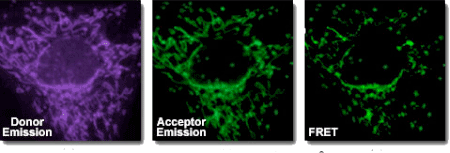
Peptide Fluorescence Resonance Energy Transfer FRET Microscopic Analysis
Figure 1. Microscopic Visualizations Demonstrating Donor Emission, Acceptor Emission, and Intracellular FRET Signal Tracking via Dye-Conjugated Peptide Probes.

Standard Peptide Fluorescent Modification Profiles

Genixpep provides precise terminal fluorophore anchoring. Below are our standard direct labeling configurations and optimized organic linker modifications designed to minimize spatial hindrance between the target peptide sequence and the fluorescent dye core.

Modification Common Name Direct N-Terminal Labeling N-Terminal Labeling with Linker Spacer
Biotin (Biotinylation) Biotin- Biotin-Ahx-
Fluorescein Isothiocyanate (FITC) FITC- FITC-Ahx-
5-Carboxyfluorescein (5-FAM) 5-FAM- 5-FAM-Ahx-
Dansyl Chloride Dansyl- Dansyl-Ahx-
5-Carboxytetramethylrhodamine (TMR / TAMRA) TMR- (TAMRA-) TMR-Ahx- (TAMRA-Ahx-)

Internal & Side-Chain Dye Conjugation via Lysine Residues

For sequences requiring free terminal ends or multiplexed labeling configurations, Genixpep utilizes the ε-amino group of internal Lysine (Lys) side chains to securely anchor fluorophores across distinct regional segments of the peptide backbone.

Modification Target Probe Peptide N-Terminus Integration Internal Mid-Sequence Integration Peptide C-Terminus Integration
Lys(Biotin) Package Lys(Biotin)- -Lys(Biotin)- -Lys(Biotin)
Lys(FITC) Package Lys(FITC)- -Lys(FITC)- -Lys(FITC)
Lys(5-FAM) Package Lys(5-FAM)- -Lys(5-FAM)- -Lys(5-FAM)
Lys(Dansyl) Package Lys(Dansyl)- -Lys(Dansyl)- -Lys(Dansyl)
Lys(TMR / TAMRA) Package Lys(TMR)- -Lys(TMR)- -Lys(TMR)
Lys(Dnp) Package Lys(Dnp)- -Lys(Dnp)- -Lys(Dnp)

Fluorophore Excitation & Emission Spectral Reference Matrix

To assist researchers in instrument calibration and multi-color channel optical configuration, the table below compiles the exact peak Excitation wavelengths (Ex, nm) and Emission wavelengths (Em, nm) for our comprehensive dye catalog.

Fluorophore / Dye Base Ex (nm) Em (nm) Fluorophore / Dye Base Ex (nm) Em (nm)
7-Hydroxycoumarin 325 386 R-phycoerythrin (PE) (489) 565 578
Dansyl Amide 340 578 Rhodamine Red-X 560 580
AMC 345 445 Tamra 565 580
7-Methoxycoumarin 360 410 Alexa fluor 555 556 573
Alexa fluor Series 345 442 Alexa fluor 546 556 573
Aminocoumarin 350 445 Rox 575 602
Dabcyl 453 Alexa fluor 568 578 603
Cy2 490 510 Texas Red 589 615
FAM 495 517 Alexa fluor 594 590 617
Alexa fluor 488 494 517 Alexa fluor 621 639
FITC 495 519 Alexa fluor 633 650 668
Alexa fluor 430 430 545 Cy5 (625) 650 670
5-FAM 492 518 Alexa fluor 660 663 690
Alexa fluor 532 530 555 Cy5.5 675 694
HEX 535 556 TruRed 490; 675 695
5-TAMRA 542 568 Alexa fluor 680 679 702
Cy3 550 570 Cy7 743 767
TRITC 547 572 Cy3.5 581 596
Regulatory Compliance Notice: All synthetic dye modification portfolios, linker protocols, and optical wavelength datasets presented above are customized exclusively for in-vitro fluorescence microscopy validation, diagnostic fluorophore screening, and preclinical academic laboratory assays. These chemical complexes are not engineered, cleared, or fit for in-vivo diagnostic procedures or direct clinical trial human applications.