
Fluorescent Labeling Principles in Peptide Synthesis
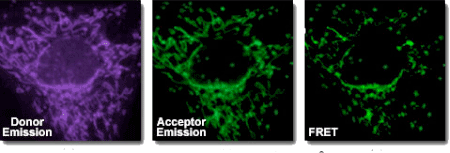
Fluorescent dyes serve as indispensable molecular tools in modern biological analysis. Dye-conjugated peptides are widely utilized as highly sensitive probes in fluorescence microscopy, flow cytometry, and fluorescence resonance energy transfer (FRET) assays. Generally, FITC and alternative fluorophores can be site-specifically conjugated to either the N-terminus or C-terminus of a peptide chain. However, N-terminal labeling is highly recommended due to its superior coupling efficiency, significantly shorter reaction times, and ease of synthetic manipulation. Because most peptides are elongated from the C-terminus to the N-terminus during solid-phase synthesis (SPPS), incorporating an N-terminal modification acts as the final terminal step without necessitating additional complex side-chain orthogonal deprotection. Conversely, C-terminal labeling typically introduces steric bottlenecks and requires supplementary multi-step synthetic adjustments, rendering the overall process substantially more complex.
Standard Peptide Fluorescent Modification Profiles
Genixpep provides precise terminal fluorophore anchoring. Below are our standard direct labeling configurations and optimized organic linker modifications designed to minimize spatial hindrance between the target peptide sequence and the fluorescent dye core.
| Modification Common Name | Direct N-Terminal Labeling | N-Terminal Labeling with Linker Spacer |
|---|---|---|
| Biotin (Biotinylation) | Biotin- | Biotin-Ahx- |
| Fluorescein Isothiocyanate (FITC) | FITC- | FITC-Ahx- |
| 5-Carboxyfluorescein (5-FAM) | 5-FAM- | 5-FAM-Ahx- |
| Dansyl Chloride | Dansyl- | Dansyl-Ahx- |
| 5-Carboxytetramethylrhodamine (TMR / TAMRA) | TMR- (TAMRA-) | TMR-Ahx- (TAMRA-Ahx-) |
Internal & Side-Chain Dye Conjugation via Lysine Residues
For sequences requiring free terminal ends or multiplexed labeling configurations, Genixpep utilizes the ε-amino group of internal Lysine (Lys) side chains to securely anchor fluorophores across distinct regional segments of the peptide backbone.
| Modification Target Probe | Peptide N-Terminus Integration | Internal Mid-Sequence Integration | Peptide C-Terminus Integration |
|---|---|---|---|
| Lys(Biotin) Package | Lys(Biotin)- | -Lys(Biotin)- | -Lys(Biotin) |
| Lys(FITC) Package | Lys(FITC)- | -Lys(FITC)- | -Lys(FITC) |
| Lys(5-FAM) Package | Lys(5-FAM)- | -Lys(5-FAM)- | -Lys(5-FAM) |
| Lys(Dansyl) Package | Lys(Dansyl)- | -Lys(Dansyl)- | -Lys(Dansyl) |
| Lys(TMR / TAMRA) Package | Lys(TMR)- | -Lys(TMR)- | -Lys(TMR) |
| Lys(Dnp) Package | Lys(Dnp)- | -Lys(Dnp)- | -Lys(Dnp) |
Fluorophore Excitation & Emission Spectral Reference Matrix
To assist researchers in instrument calibration and multi-color channel optical configuration, the table below compiles the exact peak Excitation wavelengths (Ex, nm) and Emission wavelengths (Em, nm) for our comprehensive dye catalog.
| Fluorophore / Dye Base | Ex (nm) | Em (nm) | Fluorophore / Dye Base | Ex (nm) | Em (nm) |
|---|---|---|---|---|---|
| 7-Hydroxycoumarin | 325 | 386 | R-phycoerythrin (PE) (489) | 565 | 578 |
| Dansyl Amide | 340 | 578 | Rhodamine Red-X | 560 | 580 |
| AMC | 345 | 445 | Tamra | 565 | 580 |
| 7-Methoxycoumarin | 360 | 410 | Alexa fluor 555 | 556 | 573 |
| Alexa fluor Series | 345 | 442 | Alexa fluor 546 | 556 | 573 |
| Aminocoumarin | 350 | 445 | Rox | 575 | 602 |
| Dabcyl | 453 | – | Alexa fluor 568 | 578 | 603 |
| Cy2 | 490 | 510 | Texas Red | 589 | 615 |
| FAM | 495 | 517 | Alexa fluor 594 | 590 | 617 |
| Alexa fluor 488 | 494 | 517 | Alexa fluor | 621 | 639 |
| FITC | 495 | 519 | Alexa fluor 633 | 650 | 668 |
| Alexa fluor 430 | 430 | 545 | Cy5 (625) | 650 | 670 |
| 5-FAM | 492 | 518 | Alexa fluor 660 | 663 | 690 |
| Alexa fluor 532 | 530 | 555 | Cy5.5 | 675 | 694 |
| HEX | 535 | 556 | TruRed | 490; 675 | 695 |
| 5-TAMRA | 542 | 568 | Alexa fluor 680 | 679 | 702 |
| Cy3 | 550 | 570 | Cy7 | 743 | 767 |
| TRITC | 547 | 572 | Cy3.5 | 581 | 596 |